
salt
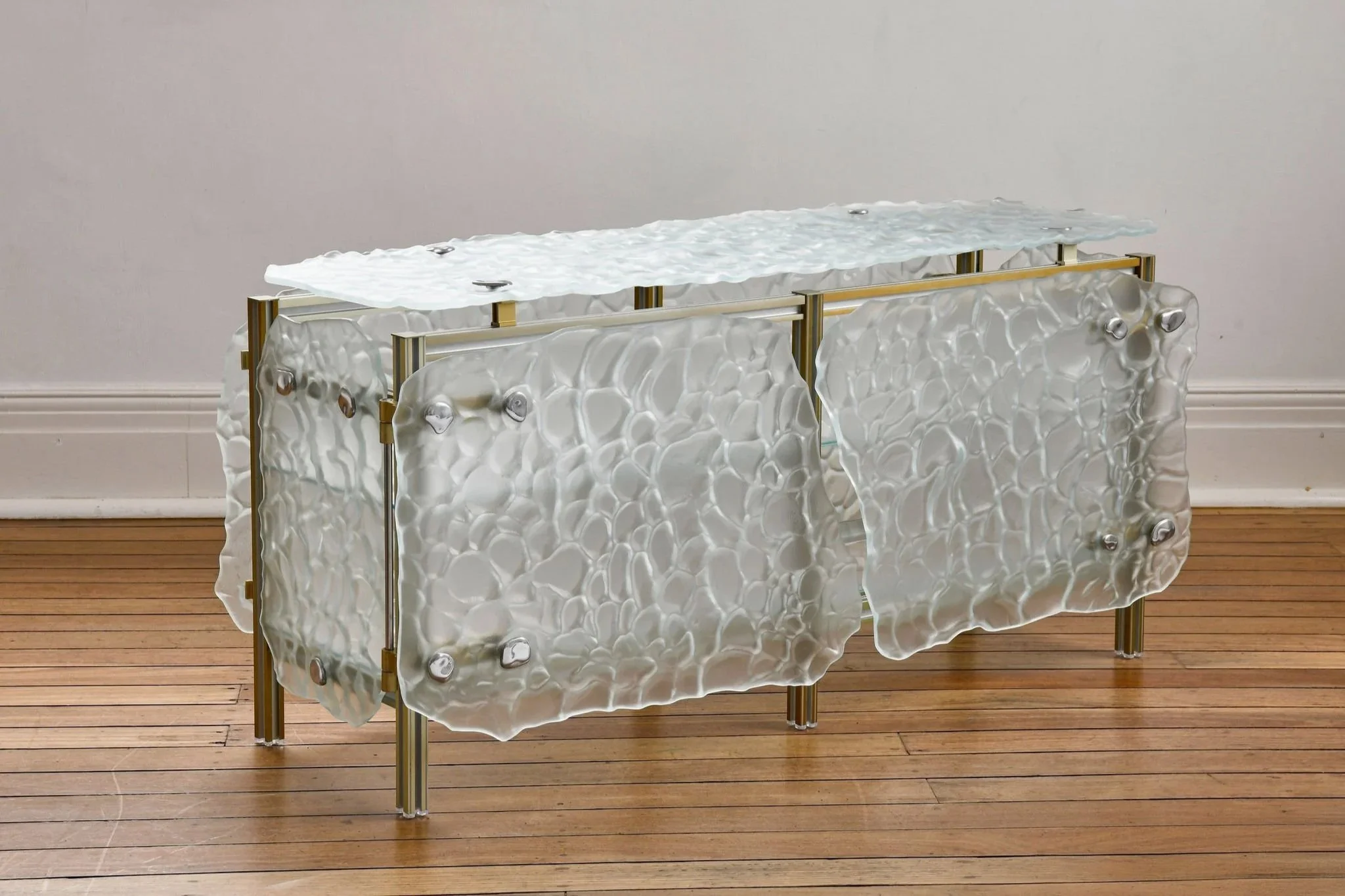
Salt is a credenza that explores Australian material culture, specifically in relation to the Sydney coastline. As an environment defined by the intersections between sea, earth and flora, we ruminate on the aspects of cultural heritage that permeate the space, shaping our personal and collective identity.
Forming over a period of 250 million years ago, Hawkesbury Sandstone is a unique geological phenomena that forms the bedrock of what is now known as Greater Sydney. Through its use in architecture it formed the visual aesthetic of the ‘new colony’ post invasion, and shaped society in how it determined industry, farming, water sources, and urban sprawl. As Sydney and the wider regions became modernised it has become a signifier of unique cultural leisure time - its qualities enabling the clear water, soft sand, coves, cliffs, ocean pools and waves so iconic to Sydney.
Always in flux, the rigid rock is in fact ephemeral and evolving, mirroring its relationship with, and role in human society. The distinctive hollows caused by abrasive salt-laden wind are the reflective of time passing, imprinting the transitory conditions in the soft surface of this otherwise millenia-old stone.
These erosion patterns can speak to intangible aspects of heritage that unify us. Our harbour and coast as an ‘aquatic common’, a space of transient boundaries, defined by materiality that speaks to modern cultural practices, time passing and connection to place.
Designed and produced for Rigg Design Prize 2025, NGV Australia
Photography by Kyle Ford
Many thanks to Axolotl for their production assistance.
Created using two making techniques uniquely developed by our studio, Salt’s ornamentation is inherently Australian and of this time - inextricably linked to us and our local landscape.
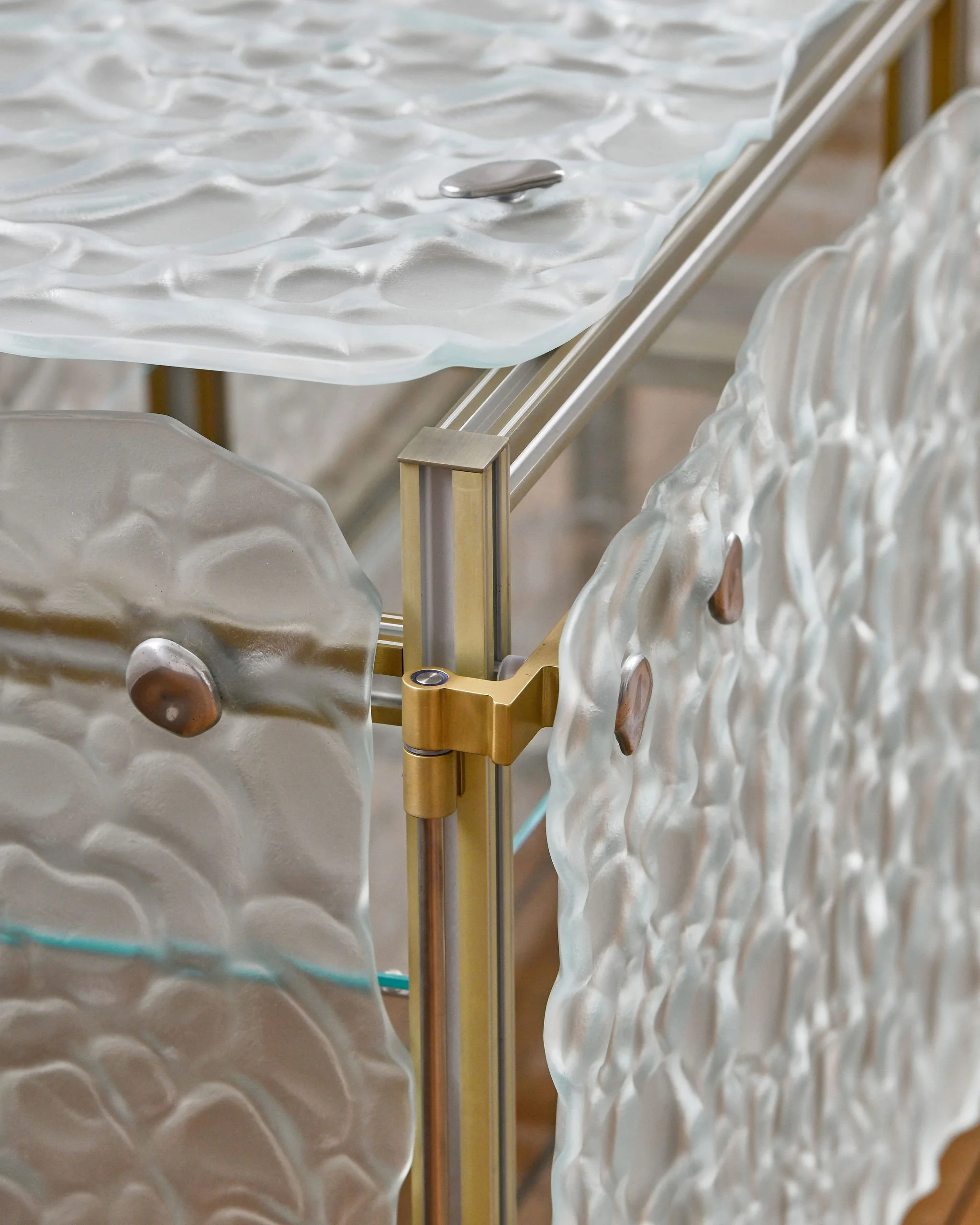
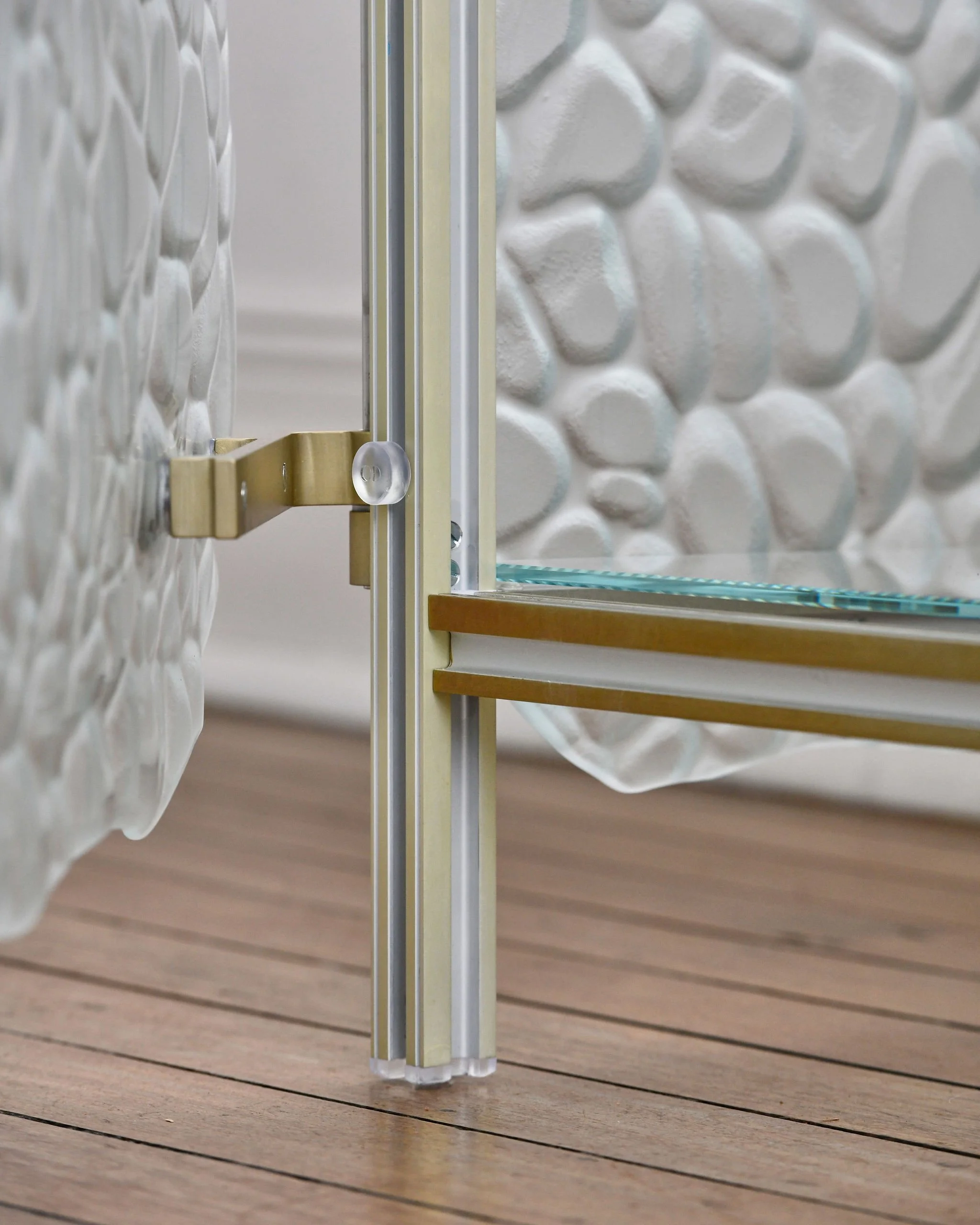
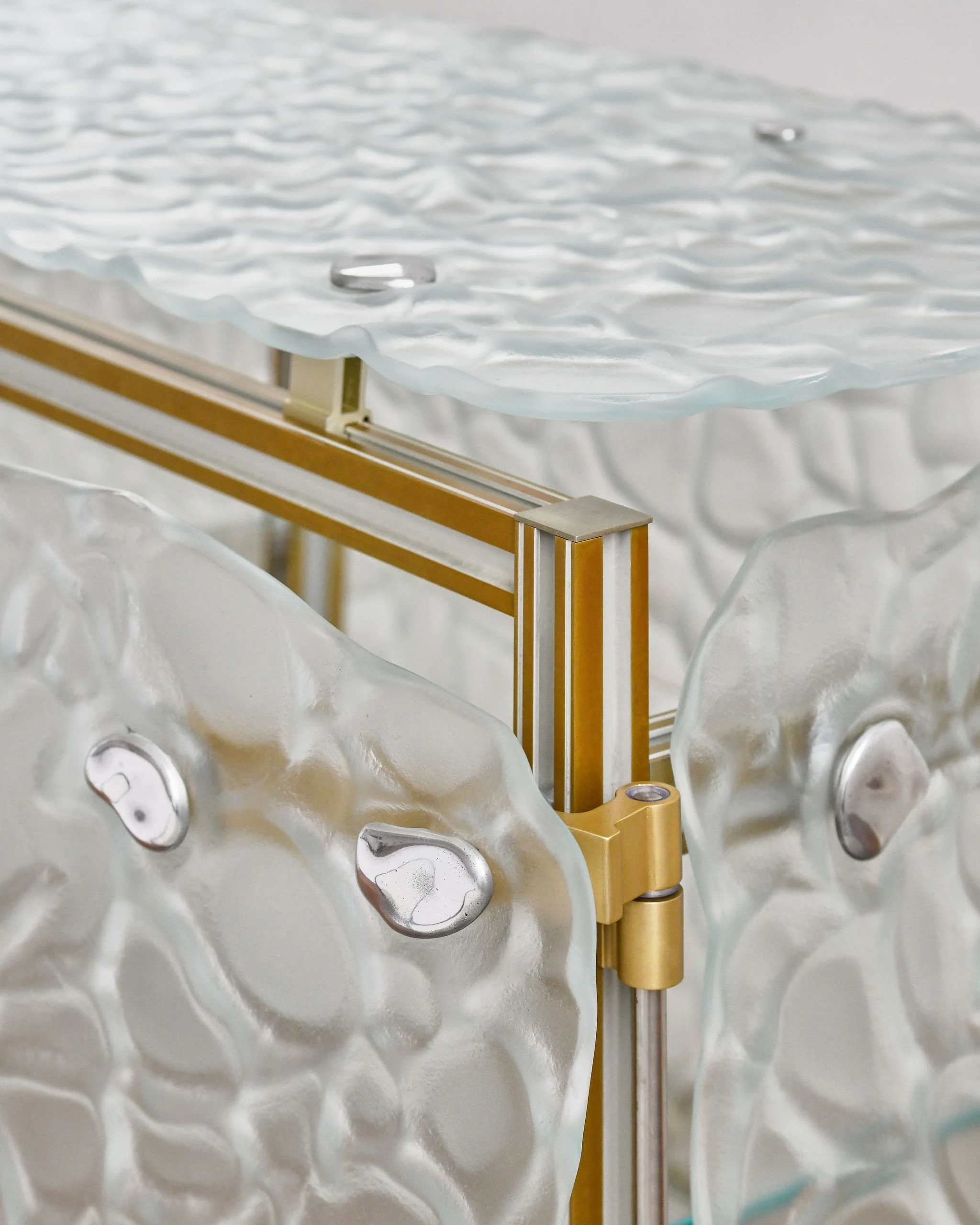
For the outer surfaces, we capture and evolve sandstone yet again through the translation of surface texture into glass form. Through a process of photography, digitisation, foam-cutting and sand-casting, flat planes of glass are cast in erosion patterns endemic to this area. Some are then sandblasted and softened, appearing to have been tumbled through the shore. Other surfaces are left polished to catch the light and emulate the shimmering light of tidal rockpools. The panels of glass are secured to, and spaced off the frame, giving a lightness to the form.
The warm tones and distinct colour banding of sandstone is brought back to the piece through the aluminium frame, constructed from layered scrap aluminium that is refinished and dyed with natives. Soft golds are imbued in the aluminium by local Eucalypts, Acacias and Callistemons and applied through an anodising process developed by our studio.
Produced 2025.